Industrial real estate shifts inland as power grid constraints dictate future hub locations

By Katie Ann McCarver
Las Vegas Sun / Vegas Inc
Aug. 31 https://vegasinc.lasvegassun.com/business/2026/aug/31/companies-swap-just-in-time-inventory-for-regional/

Commercial real estate is being reshaped by a fundamental shift in how companies manage inventory
— moving away from just-in-time (JIT) methodology, with minimal stock on hand, toward just-in-case
(JIC), the amassing of “safety stock” to buffer against supply disruption.

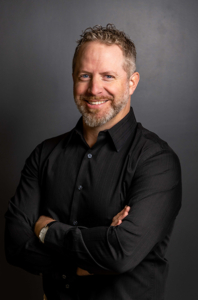
“Disruption is the new baseline,” said Ruben Ramirez, head of occupier services for the Americas
Industrial & Logistics division at CBRE, a commercial real estate services firm headquartered in
Dallas. “It’s not the exception anymore. So you’ve got to plan for disruption.”

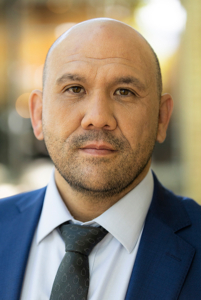
Ramirez and John Kirkman, managing senior director and supply chain advisory leader at CBRE, laid
out the shift during a panel discussion, “Navigating the Modern Supply Chain,” hosted by CREDA,
the Commercial Real Estate Development Association, Southern Nevada chapter, on Aug. 20 at
The Orleans in Las Vegas. Hundreds of local commercial real estate players, UNLV students and other
stakeholders attended.

“Supply chain’s happening. Real estate’s happening,” Ramirez said. “Are the conversations happening
together?”
He pointed to disruptions including trade volatility and tariff instability, global shocks like the COVID19 pandemic, port congestion, shipping delays, closure of the Strait of Hormuz and inflationary pressures as drivers of the shift.

A JIT supply chain is typically more about managing cost than unlocking revenue, and tends toward
real estate that is port-proximate and in import gateways. That’s changing, Kirkman said.
“Just-in-case inventory places inventory closer to consumption,” he said, naming midcontinent markets
like Columbus, Ohio, Kansas City, Mo., or Dallas as beneficiaries. “We’re seeing the center of the U.S.
emerge as epicenters and hubs.”
Companies are moving from one or two large coastal or inland hubs, Kirkman said, to three or four
regional hubs.

Year-to-date, port-proximate warehouse absorption — the rate at which warehouse space gets rented or
sold — has hit a 15-year low, Ramirez said. In 2021-22, by contrast, 500 million square feet were
added to net new industrial demand because of the pandemic.
“That absorption wasn’t about e-commerce,” Ramirez said. “It was about inventories. It was about that
safety stock. It was about that shift to just-in-case — that was where that demand was coming from.
And we’re seeing a shift to that again, as more companies are, again, planning for that disruption.”

JIC is “buffer heavy,” meaning it’s built to manage swings in marketplace demand, Kirkman said.
Compared to a JIT scenario, distribution centers in a JIC supply chain are adding 15 to 25% more
square footage for the same throughput, among other changes.
Third-party logistics companies are increasingly a huge swath of industrial leasing, Ramirez said,
largely because other businesses use them to test liability in new markets and automation.
The risk of a JIT supply chain is its lack of buffer when the network is disrupted, Kirkman said —
“you’re exposed.” In JIC, the primary risk is cost.
“There’s always a healthy tension between service and cost in the supply-chain world,” he said. “When
we think about just-in-case inventory, your cost increases dramatically from an inventory-holding
position.”

Most companies sit somewhere between the two models, Kirkman said, though the center of gravity is
veering toward JIC.
Kirkman outlined the key variables companies weigh: throughput, or how much a company wants to
process each day; the scope of products and their storage; safety stock; and how many pallet positions
exist relative to the days of safety stock needed.
Safety stock — how much excess product a business has, and how many days it can last before its next
inbound shipment — is the variable most affected by what Kirkman called the “disruption decade.”
“Buffer stock protects revenue,” he said. “The biggest winners during COVID were those that had
excess inventory — poor inventory positions, comparatively, for just-in-case — but had the inventory
on hand. It really is protecting your revenue function; making sure that, as disruption events happen,
you’ve got the inventory on hand, whether it be parts, whether it be finished goods or the
manufacturing products.”

These shifts have also reset the baseline for building specifications, with a need for three to five times
higher power density, 36-foot clear heights and smart building infrastructure like fiber and edge
compute, according to the presentation. Retrofitting existing properties to meet that standard is difficult,
Kirkman said.
“It’s not just slapping lipstick on,” Ramirez said. “It’s major surgery.”

On site selection, the two discussed new criteria — water access governance, term flexibility and more
— layered onto existing needs like transportation infrastructure and labor availability.
Power is becoming a primary constraint, per the presentation, driven by tariffs, emergency orders, data
centers and interconnection queues increasingly controlled by private equity — which, Kirkman said,
“certainly don’t have Joe Consumer’s best interests at heart.”
“No longer is it, ‘Let’s look at the transportation cycle, labor and then incentives,’” Kirkman said. “It’s
now saying, ‘OK, how much power do you need? Where in the country is there power?’ And then
evaluate the efficacy of it as a supply chain hub after that, which is kind of flipping the conversation on
its head.”

He also pointed to growing automation, with companies closing distribution centers in one area to open
automated facilities elsewhere.
Site selection used to hinge on having people to pack boxes, Kirkman said; now it’s about having
technicians who can work with the technology. Fewer employees doesn’t mean lower cost, he added,
since those technicians tend to be paid more than the packing jobs they replace.
“The tension there is, we’re wildly understaffed for a technical workforce,” Kirkman said. “These
private companies are shopping around on their own to teach up these folks, but there’s just a mass
skills trade shortage in the United States today.

Shallow bay industrial buildings – long overlooked in favor of larger, single-tenant logistics facilities – are drawing renewed attention from institutional investors and lenders as constrained supply and resilient tenant demand set the stage for continued outperformance

The CREDA Research Foundation published a new report (Read the Report: Developing, Owning and Operating Shallow Bay Industrial Buildings ) which draws on interviews with more than two dozen developers, investors, lenders and architects to examine best practices for acquiring, operating and developing this niche segment of the industrial sector.
Key Takeaways:
  • Multitenant shallow bay industrial buildings serve a diverse range of local and regional businesses, making them less sensitive than larger logistics facilities to booms and busts.
  • Demand for shallow bay space is usually greatest near population centers and transportation thoroughfares. Higher land costs in these locations and higher per square foot construction costs for smaller buildings have limited new construction of this product type.
  • Many investors in the shallow bay space focus on buying vintage properties and marking their rents to market or retrofitting them to attract higher rents. Although the volume of new shallow bay construction has been limited, developers report making profitable investments in ground-up shallow bay projects where there is adequate demand.
  • Developing strong tenant relationships is particularly important for effectively managing shallow bay properties. Close cooperation between property management and leasing teams can help owners retain tenants and improve decisions on rental rates and capital expenditures.
  • To strike the right balance between a project’s density, functionality and costs, it is critical for developers of new shallow bay buildings to understand prospective tenant needs. Not all tenants need deep truck courts or 32-foot clear heights, but a denser site plan and lower-cost design can permanently limit a building’s marketability.

Last year, the Southern Nevada Strong Underutilized Lands Inventory (“the ULI study”) identified 78,285 acres of vacant or “underutilized” land within urbanized Clark County. CREDA’s development community quickly recognized that this figure did not reflect the amount of land realistically available for development and that, without important context, it could shape an inaccurate regional narrative. CREDA therefore moved to commission RCG Economics to provide an independent technical and market-based analysis of the ULI study.

RCG found that the inventory offers useful baseline data but does not consider several factors that determine whether land can realistically be developed, including ownership, title restrictions, zoning, infrastructure, site conditions, costs and market feasibility. These findings provide important context for understanding the region’s continued need for thoughtful federal lands policy.

The CREDA-commissioned analysis has also led to deeper communication with RTC and other local stakeholders, helping ensure that planning for Southern Nevada’s future reflects both public-sector objectives and real-world development considerations.

Click to Read the Southern Nevada Strong Underutilized Land Inventory Report Review

What limited supply means for retail, industrial and office commercial real estate in Southern Nevada:

Our May 2026 breakfast program examined the critical land supply crisis facing our region and its impact on future commercial real estate development.
Industry experts from RCG Economics and the UNLV Lied Center for Real Estate discuss why federal land constraints present a structural risk to economic diversification and quality of life in the Las Vegas valley.


July 2026

Governor Joe Lombardo is urging Congress to advance long-stalled bipartisan Nevada lands legislation that would release federal land for housing and responsible development while protecting natural resources.

Read this from 8 News Now:
Nevada Governor Lombardo looks for help in Congress to Break Nevada Land Logjam

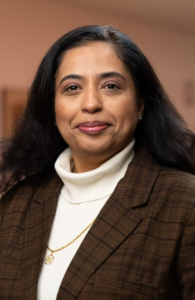
Name: Nousheen Javed
Title: Chief Executive Officer
Company: Quasar

What motivates you to work hard?  Solving problems motivates me to do the work I do every day. The challenges that our communities are facing, related to housing, climate, and health, all in the context of the built environment, need immediate attention from professionals like me. I believe finding the solution to these challenges and understanding their different layers is crucial for our socio-economic betterment. Ultimately, it’s the thought of doing better for the community and for myself as part of that community that motivates me to work hard.

What talent would you most like to have?  Leonardo Da Vinci’s talent for painting and art.

What is your most marked characteristicI am resilient, persistent, and patient as a bull.

Name: Erik Swendseid
Title: Vice President – Design
Company: EV & A Architects

What do you enjoy doing outside of work?  Outside of work, I like to be outside! It could be throwing or hitting a ball, fishing by a campsite, driving with the tops off, or even doing yardwork. I try to take advantage of all the fresh air I can.

What do you want your legacy to be in the Southern Nevada Community?  I am inspired by so many aspects of Southern Nevada’s environment, from the eclectic and outspoken to the balanced and subtle elements that shape our community and environment. I hope to contribute to that dynamic mix in a way that reflects a fearless spirit, showing we weren’t afraid to be bold. This city thrives because of the many voices and visions that make it great, and it would be an honor for my work to stand alongside those who came before me and those still to come.

What do you hope to get out of your participation in NAIOPThe local chapter in southern Nevada is truly a fantastic gathering of aspiring thinkers and doers, I mean who doesn’t like to be around this group of thoughtful and ambitious people? I’ll just try to contribute as much as I take, keep exploring better ways to do things, and do my best to ensure the work we do is as valuable as it is inspiring.

Name: Larry Curtis
Title: Principal Architect
Company: FFKR Architects

What do you enjoy doing outside of work?  I have always practiced martial arts, and now I study Win Chun Kung Fu.

What motivates you to work hard?  My motivation is simple, my clients. The legacy I help my clients to leave on their communities, their companies, and their families becomes part of my legacy. As an Architect, I am uniquely capable of designing our built world and capturing the vision and desires of my clients.

What do you consider to be your greatest achievementThe team I have built is my greatest achievement. I have built a team that has an incredible amount of expertise and has given us the opportunity to do massive projects, including high rise multifamily, hospitality, and office projects.

Name: Myles Bendavid
Title: Financial Analyst
Company: Mark IV Capital

What do you enjoy doing outside of work?  Outside of work, I enjoy traveling, golfing, weightlifting, playing basketball, skiing, playing tennis, and cooking.

What is your ultimate career goal?  My ultimate career goal is to successfully complete multiple development projects and build a personal portfolio of five or more commercial properties. This portfolio would provide long-term financial freedom and allow me to partially retire – though I never intend to fully retire, as I plan to remain active in my work for as long as I am physically able.

What motivates you to work hardMy primary motivation for working hard is to provide the best possible life for my future family and children. My parents dedicated themselves to giving me an amazing life, and I aspire to do the same, if not more, for my own kids.

Name: Scott Acton
Title: CEO
Company: Forte Specialty Contractors

What do you enjoy doing outside of work?  Outside of work, I love traveling. I enjoy stumbling upon unique pieces of architecture and usage of materials for inspiration and seeing how other cultures have created environments that they call home. I love enjoying a fine meal at a new restaurant. I’m a car enthusiast and love attending a good concert!

What motivates you to work hard?  Stay out of trouble! I have to put my very busy brain to work or I will find myself in a bind! For me, to live is not to just exist – to live is to continue evolving, growing, changing, which means creating for me. I find my motivation in continuing to find newer, faster, more efficient methodologies in different construction trades. There is nothing I find more rewarding than helping someone learn to grow; I have had an amazing career and I have so much to pass on!

If you could live anywhere, where would it be?  I would prefer to live near the ocean with a piece of land large enough for a greenhouse/garden. Ideally, it would be where my kids are as well, and some where I could walk to get coffee every morning and have enough space to myself but also a place to foster community with other creatives!

©2026 CREDA Southern Nevada - All rights reserved.