Name: Guy Gugino Title: Vice President / Business Development Officer Company: Union Bank # years in the industry: 30
Where are you originally from and how long have you lived in Las Vegas. I’m from Niagara Falls, New York. My family came here 44 years ago, in the Spring of 1978, after huge blizzards in Western New York.
What has NAIOP provided you that has helped you grow professionally or personally? NAIOP provides me access to professionals in and related to the development of commercial real estate. The Monthly Breakfasts, educational opportunities and the Government Affairs Committee provides me valuable knowledge.
What has been your favorite experience or story that happened at NAIOP event? I have a great time at all the events. I partiality for the Golf Tournament as I have worked on the committee for many years, and always enjoy the event. One of my best experiences is receiving the Rayburn P. Jones Memorial Trophy in 2019. It meant a lot to me.
Who have you met at a NAIOP event that has influenced you or that you have become close friends with? I’ve meet so many great people though NAIOP. Rick Myers from Thomas and Mack Development Group is someone who I have gotten to know through NAIOP. Rick has been a great mentor, friend and professional contact.
What do you want your legacy to be in the Southern Nevada community? I hope I am recognized as someone serves his community well.
The NAIOP Community Service Committee has been actively stepping up in 2022, with more exciting activities in our community to come! Throughout April and May, members raised funds for the Make-A-Wish “Walk a Mile” event. The group surpassed their fundraising goal and raised over $16,000. These donations will make lasting impacts in the lives of children with critical illnesses in the Las Vegas Valley, and we are extremely grateful for your support!
The committee has been in high gear since the beginning of the year and just wrapped up another successful drive for Street Teens. Since 2001, Street Teens has been providing life changes services to homeless, abandoned and at-risk youth across the Valley. WOW! We collected: 15 pairs of shoes, 19 pairs of work pants, 135 sunscreens, 48 baby outfits, 43 baby swaddles and blankets, 17 phone chargers, 10 ear buds and 620 body wipes, $850 in cash donations and $75 in Amazon Gift Cards. We are so grateful to all who generously donated to this great cause.
Get your bowling shoes ready! The highly anticipated Bowling Tournament is coming up on July 28, 2022 at The Orleans Bowling Center. The Community Service Committee holds a raffle during the scoring at the end of the tournament and has collected some great prizes, so we hope to see you!
Please contact any committee member for information about our past or upcoming events and how you can take part in the committee. We are always looking for new members!
Thank you to everyone for your continued support, it does not go unnoticed and together we can make a meaningful impact!
The recent exposure of Lake Mead’s Intake 1 is a stark reminder of the threat ongoing drought poses to Las Vegas’ water supply. Despite the challenging conditions, however, Southern Nevada is the most water-secure metropolitan area in the desert Southwest.
“We have two key advantages that protect our most critical water needs,” said J.C. Davis, enterprise conservation manager for the Southern Nevada Water Authority (SNWA). “First, we capture and recover nearly all water used indoors, so those uses are secure. Second, we invested more than $1 billion in a new intake and pumping facilities to draw water from near the bottom of Lake Mead.”
Understanding that Nevada’s Colorado River allocation will be curtailed as Lake Mead shrinks, the SNWA and its member agencies are implementing aggressive conservation measures focused on landscaping and evaporative cooling.
“Unlike other Southwestern cities, which could be left high and dry if Lake Mead falls below Hoover Dam’s outlets, the Las Vegas Valley is well-protected in terms of maintaining indoor uses,” Davis said. “However, outdoor uses must be reduced. We need to change the way we cool warehouses, resorts and large commercial buildings, and we need to get rid of ornamental grass.”
The SNWA is exploring a moratorium on water-cooled systems in new development. The SNWA also is funding studies to identify high-performing water-efficient cooling systems and determine the impact of alternative technologies on water consumption and energy use. Additionally, the SNWA offers significant incentives—up to 50 percent of the new equipment cost—for businesses willing to exchange their old evaporative coolers for more water-efficient systems.
If you have questions, call 702-862-3740 or visit snwa.com.
Lake Mead’s water level has dropped about 150 feet over the past 20 years, exposing Intake No. 1. As water levels continue drop, the SNWA and its member agencies are implementing aggressive conservation measures to protect the community’s water supply.
Progressive, new conservation measures aimed at protecting the community’s water supply include prohibiting grass and spray irrigation in all new developments and a possible moratorium on water-cooled systems in new development.
Some people swear that the hardest part of a construction project is getting the building permit. Maybe it’s because of guys like Bob?
All joking aside, it’s been my experience over a long engineering career that most plans examiners are sharp, honest, hard-working folks who are just doing their best in a very important, often thankless job. Here’s to them.
The 30th Annual NAIOP Golf Tournament was held on May 16, 2022 at Spanish Trail Country Club! With more than 216 golfers and 50 committee members and volunteers and all of our event sponsors, everyone enjoyed a fabulous day of golfing, refreshments, food and tee sponsor entertainment.
It was one of the first hot days in Las Vegas at 102. Our players started the day with grab and go breakfast, Bloody Mary bar, putting contest, networking and an amazing line of sponsored player giveaways.
This year our Under The Big Top circus theme was over the top! Congratulations to Helix Electric for winning the Best Circus Theme hole with their “Greatest Show on Earth” display. The players voted them as the Best “Under The NAIOP Big Top” Circus Theme Hole Sponsor with their swag table, circus treats and nacho bar. Well done!
Honorable mention goes to: FCL Builders’ DJ and photo booth, Martin-Harris Construction’s “Taco Circus”, LaPour’s coffee truck, smoothies and treats, Wright Engineers’ singers, Henriksen Butler’s circus performer, Global Roofing’s high striker game, and American Nevada Realty’s awesome circus costumes. Thank you to all of our amazing sponsors for putting in so much hard work to make it a fun day on the course for our players!
Check out our winners:
1st Net –Tyler Ecklund, David Jaramillo, Sam Powers & Drew Saldana
2nd Net – Randy Broadhead, Darren Lemmon, Brad Peterson & Justin Witt
1st Gross –Tom Healy, Geoffrey Lyons, Brian Myers & Ed Taney
2nd Gross – Steven Haynes, Ryan Hendershot, Taber Thill & Aaron West
Long Drive – (Men) – Ryan Hendershot, Ryan Martin and Jeff Mitchell
Closest to the Pin – (Men) Steven Haynes, Sam Myers, David Strickland
Closest to the Pin – (Ladies) Lori Olson, Danielle Steffen
Putting Contest – Aaron West, Colliers International
Best “Under the NAIOP Big Top” Circus Theme Hole Sponsor – Helix Electric
Thank you to our Volunteers & Committee members; we couldn’t do it without you!
Volunteers:
Everlee Anies, Schnitzer Properties
Teri Askew, Converse Consultants
Ashley Bingham, 911 Restoration
Heather Brown, The Whiting-Turner Contracting Company
Deshone Brunswick, SVN | The Equity Group
Melissa Caldwell, NextGen
Catherine Casasola, TruCoat Paint
Even Chavez, BrightView Landscape Services
Devon Cole, Martin-Harris Construction
Sam Flaherty, Encore Landscape Management
Kim Galbe, EV&A Architects
Katie Goetchius, Commercial Roofers, Inc.
Kelsey Higgins, CBRE
Jade Kopittke, Prologis
Robert Kraus, One Nevada Credit Union
Jordan Leavitt, Leavitt Insurance
Meredith Livermore, Commercial Roofers, Inc.
David Logsdon, Actus
Grant McCandless, RCG Economics, LLC
Megan McInerney, Colliers International
Mark Mikelson, NADEL Architecture
Alicia Nelson, NextGen
Carie Olson, KGA Designs
Jennifer Pearson, Motivational Systems
Chase Povlov, Colliers International
Cooper Powell, Logic Commercial Real Estate
Leslie Roberts, The Whiting-Turner Contracting Company
Anna Saravia, Schnitzer Properties
Minja Yan, Millennium Commercial Real Estate
Michael Zufelt, One Nevada Credit Union
2022 Golf Committee:
Chair: Alicia Nelson, NextGen
Co-Chair: Brett Bottenberg, McGinley & Associates
Board Liaison: Michael Newman, Compass Development
NAIOP Southern Nevada: Katrina Bruce & Johna Savage
Thomas Dunton, Nevada General Construction
Roberto Gonzalez, McGinley & Associates
Guy Gugino, Union Bank
Paul Haber, XIT Solutions
Ryan Hendershot, Colliers International
Alan Johnson, R & O Construction
Ashley Kolaczynski, Prologis
David Logsdon, Actus
Terry O’Connor, SR Construction
Jen Pearson, Motivational Systems, Inc.
Rick Rainey, Builders United, LLC
John Rizzo, 555 Solutions LLC
Wendi Schweigart, NDL Group Inc.
Sasha Smith, Bergelectric Corporation
Bob Stewart, Old Republic Title
Nick Till, NAI Vegas
Rove Villaruel, Wells Fargo Bank
Once again, thank you to all of our fabulous event Sponsors, our awesome Golf Committee and the outstanding Volunteers who made the event a huge success. And as always, thank you Katrina and Johna for all that you do! Congratulations to our winners and we look forward to next year! If you are a NAIOP member and would like to serve on the committee, please reach out.
Save the date of our 2023 Tournament on Thursday, May 4, 2023 at the Las Vegas Paiute Golf Resort.
Dear Principal Members and President Circle Sponsors,
This email is a follow up to the Government Affairs Alerts sent in December and January regarding the proposed Evaporative Cooling Systems ban. As you may be aware, on December 8, 2021, Clark County proposed a ban on all evaporative cooling systems. On December 20, 2021, the Southern Nevada Water Authority Board passed a resolution supporting a county-wide moratorium on the use of evaporative cooling systems. This resolution directed all local jurisdictions to begin working toward ordinances and/or other administrative measures (through procedure, building codes, or otherwise) that would no longer allow evaporative cooling systems to be used for any new commercial project.
At this time, no ban or moratorium has officially been placed into effect at any local municipality, although Clark County has already begun inserting advisory language into all “Notice Of Final Action” letters for new projects that such systems will be banned. Here is an example of that language (submitted to us by a NAIOP member):
“Applicant is advised that the installation and use of cooling systems that consumptively use water will be prohibited.”
In response to these actions, the NAIOP Southern Nevada Government Affairs Committee formed a subcommittee tasked with managing this issue and working with industry and community stakeholders to both advocate for the commercial real estate industry and educate and inform community leadership of potential economic impacts.
Within the first several weeks of the new year, it became clear from several conversations and inquiries that our elected officials and the Southern Nevada Water Authority Board needed to hear from our industry on the issue. The subcommittee drafted the attached letter, which was sent to every commissioner, councilperson, and mayor in Southern Nevada. Additionally, local trade organizations responsible for economic growth in Southern Nevada received a copy of the letter.
As we move forward with DRI studies, we will also be reaching out to our principal members for additional information that we will need in order to complete Economic Impact Summaries. We ask that our principal members be ready to help NAIOP in the coming weeks.
There is no doubt that our region is currently experiencing a drought worse than experts expected. It would be reasonable for our members to expect numerous changes in the coming months and years regarding how our community uses water. It is our job to advocate for our industry in a manner that is considerate of our community’s best interests, as community leadership attempts to navigate current climate realities.
Should you have any questions or comments, please do not hesitate to contact chapter leadership.
NAIOP’s Developing Leaders Institute (DLI) committee is pleased to announce its Class of 2023. DLI is a 12-month curriculum of leadership and real estate training taught by the leading professionals from the Southern Nevada real estate and development industry. The interest in this program was phenomenal and the selection process was extremely competitive. Included in this year’s program is a group of 21 young professionals who have distinguished themselves as future leaders of the industry.
DLI Supporter level sponsorships are welcomed at $500. If you’d like to become a supporter, please contact me or click here for the commitment form.
Please make sure to congratulate our newest class as you come to know them!
NAIOP Southern Nevada started 2022 on strong footing with the Southern Nevada commercial real estate development market active and healthy. We expected uncertainty from lingering pandemic affects, inflation, supply chain issues, and local municipalities, specifically regarding water conservation efforts around evaporative coolers.
All of those are still present but you can add the invasion of Ukraine and gas prices at $5.35 per gallon. You know what else we didn’t see coming… a reignited relationship between LVGEA and NAIOP SNV.
If you have been following me at all on social media, you know that I have taken up distance running. I hired a coach and I’m training for a full marathon. One thing you learn when you test yourself in this way that most things parallel running.
Here we are a quarter of the way into the year. We knew the road ahead of us when we started the year. While we were aware of the challenges, we couldn’t anticipate them all. And we were even delighted, by an unexpected positive boost, meeting a friend on the running trail.
Right about mile 3 is when I start to find the rhythm of the run. I think NAIOP SNV has found the rhythm of the year too.
The Government Affairs Committee convened an Evap Committee that has met weekly to monitor and respond timely to this issue. In March, NAIOP engaged the Desert Research Institute to prepare a case study estimating water and energy use from evaporative coolers for conditions specific to Southern Nevada.
Tina Quigley participated in a round table with seven NAIOP Principal and Board Members. She was also a panelist for the March Breakfast Program. On March 16th there was a meeting with the NAIOP Board, LVGEA and GOED to explore how we can work together and not in silos. These are early days, but they sure feel good!
The RTC has reconvened its Transportation Resource Advisory Committee and NAIOP SNV is involved. On March 24th, they organized a field trip for TRAC members to personally experience the Vegas Loop (Tesla’s transportation system, under the convention center) and ride in fully autonomous vehicles. Their pursuit is a fleet of autonomous taxis on the Las Vegas Strip.
Rounding out Committee Work
Our beloved Programs committee organized panels covering a Developer Roundtable (Jan.), UNLV Real Estate (Feb.), and Economic Development (Mar.). Expect a robust office panel on April 21, 2022 with Tom van Betten – Matter, Nick Barber – JLL, and moderator Kyle Nagy – CommCap.
Education kicked off the year with an infrastructure presentation that included Jon and Kerrie – Argentum, John Restrepo – RCG and Kris Sanchez – GOED and you should calendar Friday, May 13th for the in person Education Workshop: The Big Brand Theory: The Collision of Retail and Industrial to hear a conversation about retail as we know it, the explosion of demand for industrial from retailers and the future of e-commerce. Details are here.
If you weren’t at Stoney’s February 17th you not only missed the Member Only Mixer, but you also missed your chance to line dance with Katrina on her birthday!
Credit to Patti Dillon and her Community Service committee for imagining and innovating the New Member Coffee event. It was so successful NAIOP Southern Nevada adopted the idea for New Members. Over 25 newer members met on February 11th at Sambalatte on Jones and I-215 to learn how they could get more involved with NAIOP Committees.
Speaking of Community Service – this is such a powerhouse NAIOP SNV Committee!! Volunteers kicked off 2022 at the Ronald McDonald House Charities annual “Fill the Pantry” Food Drive. The event brought in 6 TONS of food and supplies and $15,000 in donations.
I.CON West is a national NAIOP event, this time in Long Beach. Close to a dozen NAIOP SNV members attended.
And the annual Spotlight Awards returned to an in-person event after a two-year hiatus with 650 strong celebrating our industry at Red Rock Casino Resort.
One thing I learned during marathon training is that runs don’t run themselves. You have to get your shoes on and hit the pavement to do the work. Well, NAIOP doesn’t happen by accident. It is because of you. It is because our Principal members, Sponsors, Committee Chairs, Committee Volunteers and Alternative Management who roll up their sleeves and do the work. We found our rhythm!
Through the continued spirited efforts of the NAIOP Community Service Committee, 2021 ended on a strong note. With the generous aid of our community, we were able to provide over 200 care packages to Catholic Workers filled with household supplies, food, and other requested goods for the December giving event.
The committee members really jumped into high gear to get these much-needed baskets assembled and prepared for delivery; there are no signs of our outreach slowing down in 2022!
Members kicked off the year ready to assist with unloading, sorting, and dating incoming donations of food and supplies at the Ronald McDonald House of Charities. Thank you to all who volunteered to help make this food drive a success. Ronald McDonald House of Charities is always in need of assistance to continue to feed and support the well-being of children in our community and will have their annual 5k “Runnin’ for the House” event on April 30, 2022 at Floyd Lamb Park. If you are interested in signing up please click here.
Coming into the month of April, we are also gearing up for the Make-A-Wish “Walk a Mile” event on April 23, 2022, at Town Square. So far, members have raised $2,474, but we NEED YOUR HELP to get to our $15,000 goal. It is not too late to sign up or donate. To register for Team NAIOP, please click here. Also be sure to check out our social media @NAIOPSNV to see how members are getting creative to raise donations!
Thank you to everyone for continuing to come together to make this community a success. We know this is a difficult time for everyone and appreciate all of the generosity and efforts continuing to be made for these great causes.
We are also always looking for new members as well! Contact any committee member for information about our past or upcoming events and how you can take part in the committee. With your support, our efforts will continue to make a meaningful impact on the Las Vegas Valley.
Megan McInerney
Associate | Las Vegas – Office Division
Colliers International
(702) 836-3700 | megan.mcinerney@colliers.com
Name: Lauren Willmore Title: Associate Company: CBRE # years in the industry: 2
Where are you originally from and how long have you lived in Las Vegas. Born and raised in Henderson, Nevada. I have been a resident for 25 years.
What has NAIOP provided you that has helped you grow professionally or personally? NAIOP has provided me with an opportunity to get to know my peers and network in fun environments. I have met some great people along the way!
What has been your favorite experience or story that happened at NAIOP event? The Make a Wish 5k Walk at Town Square was a great experience as it was one of my first events entering the industry. It was an early morning walk so I ended up bringing my dog along for the excitement, and coincidentally several committee members had the same idea. We ended up have our walking group lead by the pup pack which was super cute! Doing that walk together also gave me a great opportunity to get to know everyone. To this day I still volunteer with the Community Service Committee which is the same group from that event!
Who have you met at a NAIOP event that has influenced you or that you have become close friends with? Everyone I have met so far has been awesome. If I had to pick one person who I have become close with, it would have to be Megan McInerney. She is always the best to volunteer and go to general events with. She is always in great spirits!
What do you want your legacy to be in the Southern Nevada community? To be known as someone who motivated others and someone who served with humility and compassion.

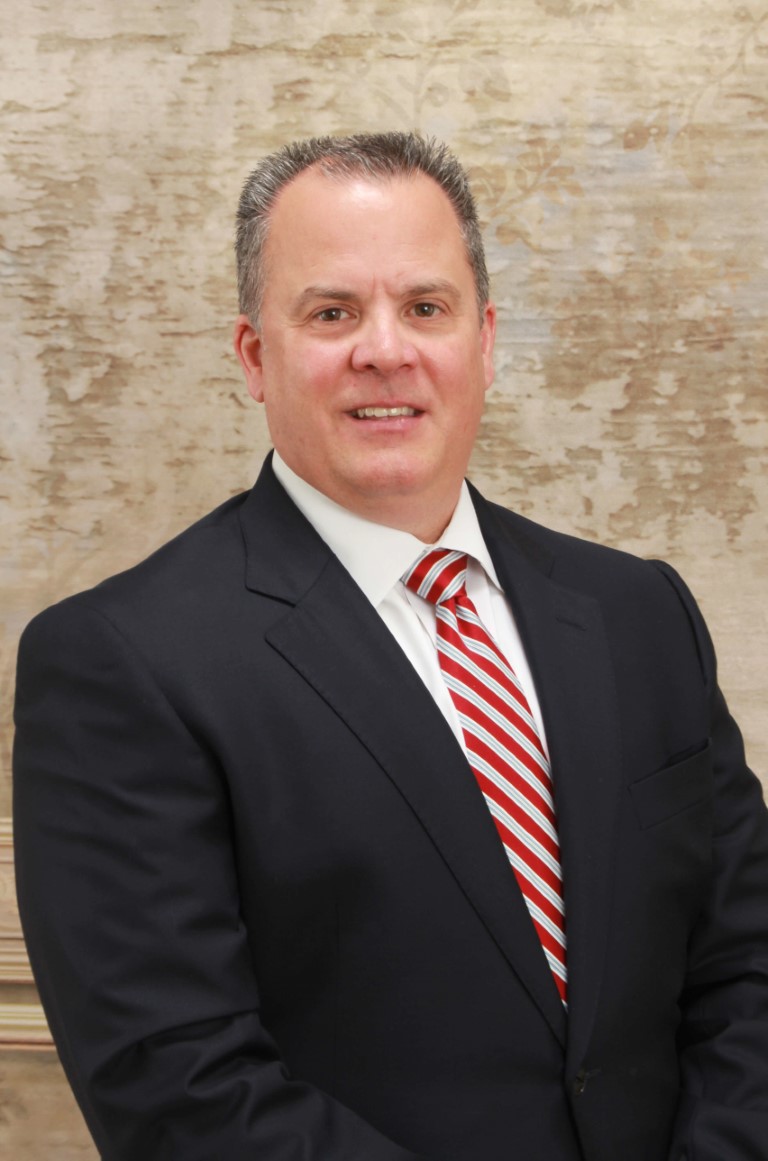 Name: Guy Gugino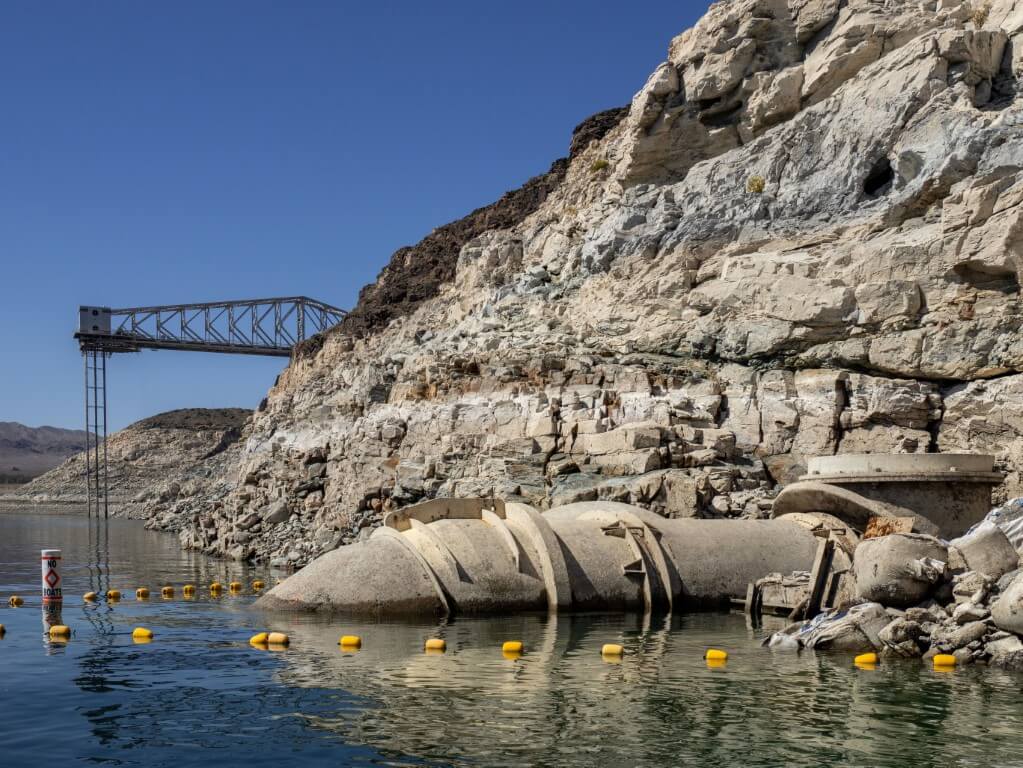
 Some people swear that the hardest part of a construction project is getting the building permit. Maybe it’s because of guys like Bob?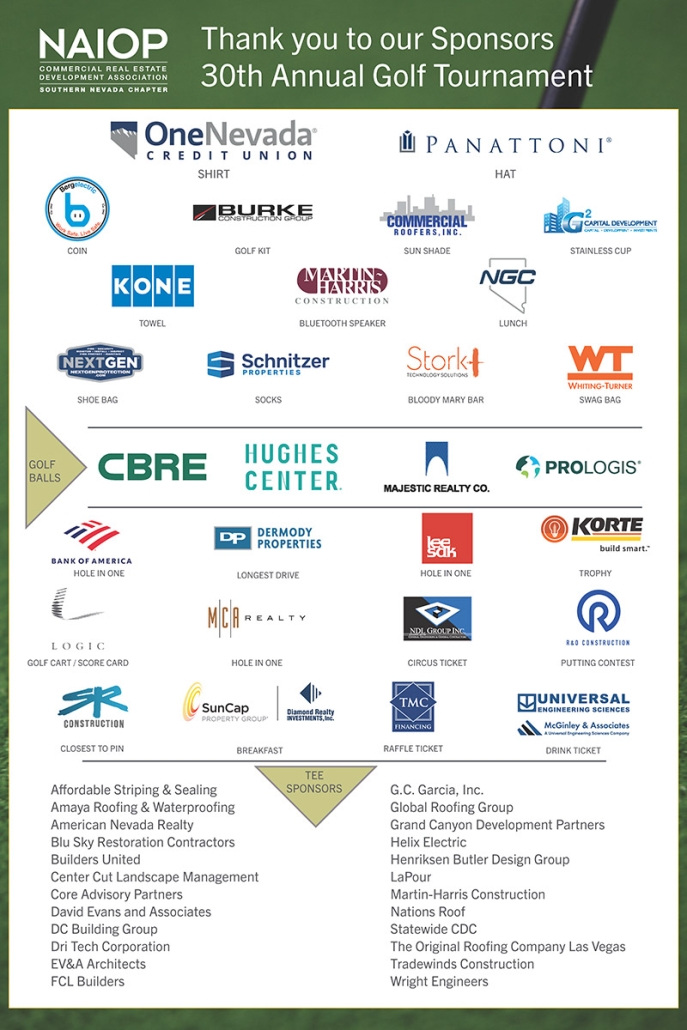

 The Government Affairs Committee convened an Evap Committee that has met weekly to monitor and respond timely to this issue. In March, NAIOP engaged the Desert Research Institute to prepare a case study estimating water and energy use from evaporative coolers for conditions specific to Southern Nevada.
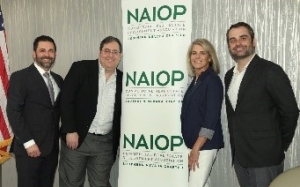 Tina Quigley participated in a round table with seven NAIOP Principal and Board Members. She was also a panelist for the March Breakfast Program. On March 16th there was a meeting with the NAIOP Board, LVGEA and GOED to explore how we can work together and not in silos. These are early days, but they sure feel good!
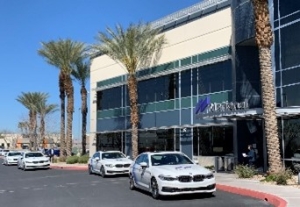 The RTC has reconvened its Transportation Resource Advisory Committee and NAIOP SNV is involved. On March 24th, they organized a field trip for TRAC members to personally experience the Vegas Loop (Tesla’s transportation system, under the convention center) and ride in fully autonomous vehicles. Their pursuit is a fleet of autonomous taxis on the Las Vegas Strip.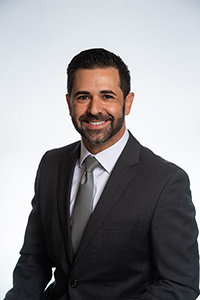
 Name: Lauren Willmore